

How to Take Your Baby or Child’s Temperature: Most Accurate Methods by Age
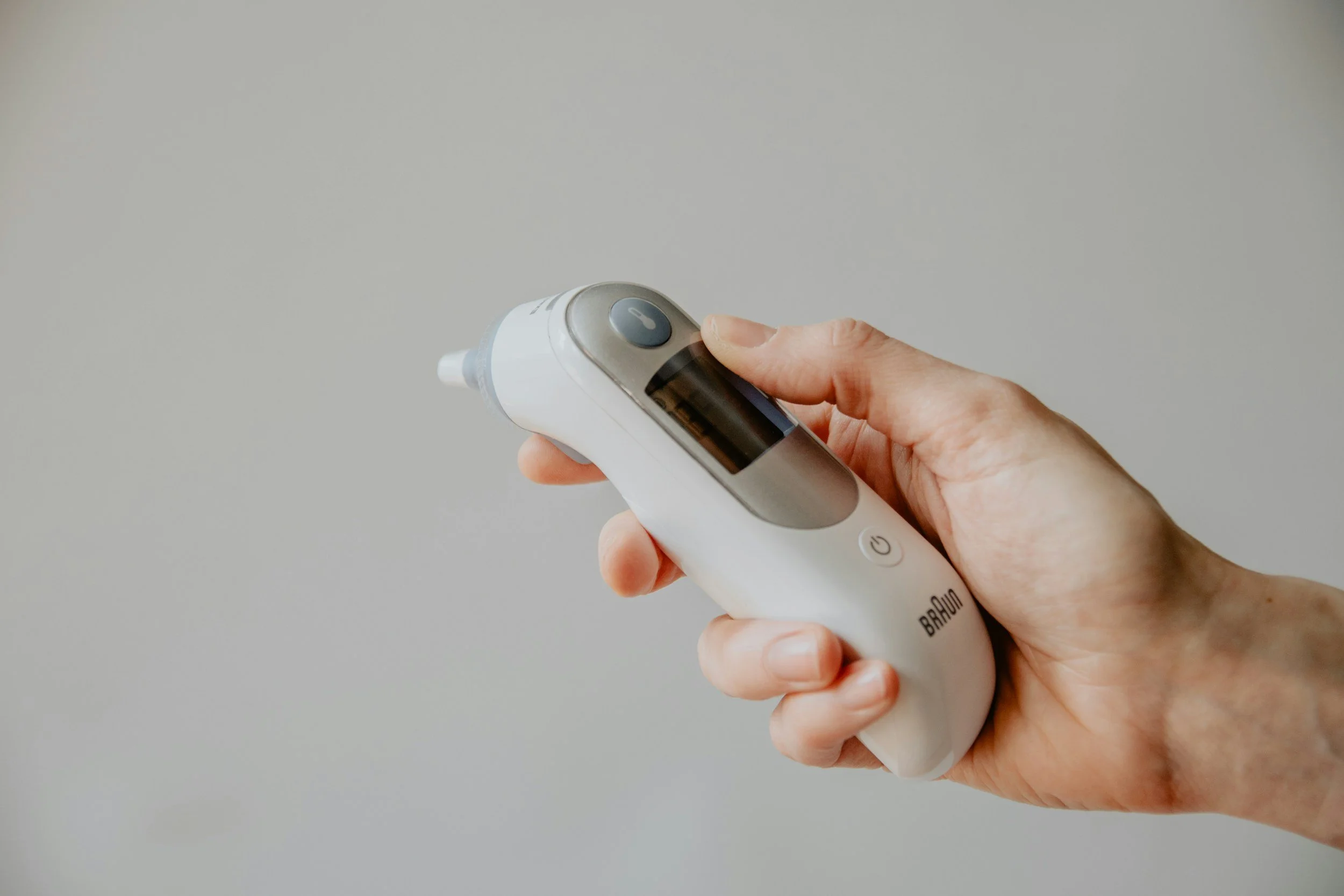
It’s 2 a.m. Your 2-year-old feels warm, is fussier than usual, and you’re standing in the hallway holding a thermometer, wondering: What’s the most accurate way to take a child’s temperature?
Temperature-taking changes as children grow. The method that works best for a newborn is not always the same one you should use for a toddler or preschooler. Using the right technique for your child’s age helps you get a more accurate reading and know when to seek care.
Nest Health is a whole-family primary care provider that offers 24/7 support to eligible families through participating health plans, including guidance on questions like these and help navigating your entire family’s health: kids and adults. If you’ve been contacted by Nest Health or your health plan — or think your family may be eligible for our services through your Medicaid health plan — call us today at 866-222-NEST (6378).
Key takeaways
- Rectal temperature is the most accurate method for babies. It reflects true core body temperature, which is why it's the preferred method for infants under 3 months.
- A fever in a baby under 3 months is always urgent. A rectal reading of 100.4°F or higher at this age needs immediate medical attention, even if the baby seems otherwise fine.
- The right method changes as your child grows. Oral readings become reliable around ages 4–5, and ear thermometers work better after age 2, so a method that suits a toddler may not suit a newborn.
- Behavior matters as much as the number on the thermometer. Signs like trouble breathing, extreme lethargy, or dehydration call for emergency care regardless of the exact reading.
Why Accurate Temperature Measurement Matters in Babies
Accurate temperature measurement matters because fever is often one of the first signs of illness in infants.
Babies, especially those under 3 months, cannot regulate their body temperature as well as older children. Even a small rise in temperature can sometimes signal a serious infection.A rectal temperature of 100.4°F or higher in a baby under 3 months should be reviewed with a healthcare provider immediately.
Precise readings help healthcare providers:
Determine whether testing is needed
Decide on treatment plans
Assess urgency
Monitor illness progression
If you are unsure about your baby’s symptoms, Nest Health’spediatric care team can guide you at home or virtually.
Most Accurate Methods to Take a Baby’s Temperature: 0 to 12 Months
For babies, especially infants under 3 months, accuracy matters. If your baby is a newborn or under 3 months old and has a rectal temperature of 100.4°F or higher, contact a healthcare provider immediately.
Do not give fever medicine to a baby under 3 months unless a healthcare provider tells you to. Never give aspirin to a child.
Rectal Temperature: Most Accurate for Babies
Rectal temperature is generally the most accurate way to take a baby’s temperature because it reflects core body temperature.
A rectal temperature may be recommended when:
Your baby appears ill
A doctor requests an exact reading
You need to confirm a possible fever
Your baby is under 3 months old and you need the most accurate reading
How to take a rectal temperature safely:
Use a digital thermometer labeled for rectal use.
Apply a small amount of petroleum jelly to the tip.
Lay your baby on their back with legs gently lifted, or on their belly across your lap or a firm surface.
Gently insert the tip about ½ inch for babies under 6 months, or up to 1 inch for older babies.
Hold the thermometer steady until it beeps, then remove gently.
Rectal readings are safe when done correctly and usually cause only brief discomfort. If you feel resistance, stop and contact your child’s healthcare provider for guidance.
Use a separate thermometer for rectal temperatures, and clearly label it so it is not used orally later.
Digital Armpit Temperature for Babies
Axillary, or armpit, temperature can be used for quick screening or when your baby is very fussy.
Armpit readings are less accurate than rectal readings and may read lower than your baby’s core temperature. If an armpit reading is elevated, or if your baby seems sick, confirm with a rectal temperature if you can do so safely or call your healthcare provider.
Steps:
Place the thermometer high in the center of the armpit.
Hold your baby’s arm snugly against their body.
Wait for the thermometer to beep.
Recheck if the number does not match how your baby seems.
For babies under 3 months, do not rely only on an armpit temperature if you are worried your baby may have a fever.
Temporal Artery (Forehead) Thermometers for Babies
Forehead, or temporal artery, thermometers are quick and non-invasive.
They work best when:
Your baby is calm and still
Skin is dry
Room temperature is stable
You carefully follow the thermometer instructions
Limitations include:
Sweating
Movement
Improper positioning
Recent outdoor exposure or bathing
Forehead thermometers can be helpful for screening, but rectal temperature is generally the most reliable method for infants, especially babies under 3 months.
Nest services may be available to your family at no additional cost through your Medicaid health plan.
Most Accurate Methods to Take a Child’s Temperature: 1 to 5 Years
As children get older, more temperature-taking methods become practical. The best method depends on your child’s age, cooperation, symptoms, and the thermometer you have at home.
Digital Armpit Temperature for Toddlers
Axillary, or armpit, temperature becomes more practical as toddlers grow.
Armpit temperatures are useful for screening, but they may be less precise than rectal, oral, ear, or forehead readings.
To improve accuracy:
Distract your child with a song, video, or book
Place the thermometer high in the center of the armpit
Hold the arm firmly against the body
Keep your child still until the thermometer beeps
Forehead Thermometers for Children
Forehead, or temporal artery, thermometers can be useful for quick checks in older toddlers and preschoolers, especially when used consistently and according to the device instructions.
For best results:
Sweep across dry skin
Follow the manufacturer’s instructions carefully
Avoid checking immediately after outdoor play, bathing, or sweating
Recheck if the number does not match how your child seems
Oral Temperature: Ages 4 to 5 Years and Older
Oral readings are appropriate when a child can:
Keep their mouth closed
Hold the thermometer under the tongue
Avoid biting the thermometer
Stay still until it beeps
Avoid food or drinks for about 15 minutes before checking an oral temperature.
Ear Thermometers for Older Children
Ear thermometers generally work better after age 2 because older children have larger ear canals.
For accuracy:
Gently pull the ear back as directed by the thermometer instructions
Aim toward the eardrum
Ensure a proper seal
Try the other ear if the reading seems off
Common errors include wax buildup, poor positioning, and use during an ear infection.
Temperature Methods to Avoid by Age Group
Not Recommended for Babies 0 to 12 Months
Avoid:
Ear thermometers under 6 months: small ear canals can make readings inaccurate.
Oral thermometers: babies cannot safely hold a thermometer under the tongue.
Pacifier thermometers: these can be less accurate and may not stay positioned correctly.
Forehead strip thermometers: these are not reliable at any age.
For babies under 3 months, use a rectal thermometer when possible and call a healthcare provider right away for a temperature of 100.4°F or higher.
Use Cautiously in Children 1 to 5 Years
Be cautious with:
Ear thermometers under age 2
Oral readings under age 4
Ear thermometers during ear infections
Oral readings when your child is mouth breathing, vomiting, or unable to keep their mouth closed
Forehead strip thermometers at any age
When in doubt, recheck the temperature or call your child’s healthcare provider.
Normal Temperature Ranges by Age and Method
A normal temperature can be a little different depending on your child’s age, the time of day, activity level, and the thermometer you use. These ranges are general guidance. Always follow your child’s healthcare provider’s instructions if they give you different thresholds.
Babies 0 to 12 Months
Rectal:
Normal range: About 97.9°F to 100.3°F (36.6° C to 38.0° C)
Fever threshold: 100.4° F (38° C) or higher
Armpit:
Normal Range: About 97°F - 99°F (36.1°C - 37.2°C)
Fever Threshold: 99.0°F (37.2°C) and above
Forehead:
Normal Range: About 97.0°F and 100.0°F (36.1°C to 37.8°C)
Fever Threshold: 100.4°F (38.0°C) or higher
Special consideration for newborns: A fever in a newborn or baby under 3 months is very serious. If your baby has a rectal temperature of 100.4°F or higher, call a healthcare provider right away. Do not give fever medicine unless a provider tells you to.
If your baby was born prematurely, has a medical condition, is feeding poorly, has fewer wet diapers, seems very sleepy, or is hard to wake, call a healthcare provider right away — even if the temperature is not very high.
Children 1 to 5 Years
Rectal:
Normal Range: About 97.9°F to 100.3°F (36.6°C to 38.0°C)
Fever threshold: 100.4° F (38°C) or higher
Armpit:
Normal Range: About 97°F - 99°F (36.1°C - 37.2°C)
Fever Threshold: 99.0°F (37.2°C) and above
Oral, ages 4+:
Normal Range: About 95.9°F to 99.5°F (35.5°C to 37.5°C)
Fever threshold: 100.0°F (37.8°C) or higher
Ear, ages 2+:
Normal Range: About 96.4°F - 100.3°F (35.8°C - 38.0°C)
Fever threshold: 100.4°F (38°C) or higher
Forehead: 98.0°F to 100.0°F | Fever 100.0°F+
Normal Range: About 97°F - 100.3°F (36.1°C - 38.0°C)
Fever threshold: 100.4°F (38°C) or higher
Call your child’s healthcare provider if your child has a fever and is acting very sick, has trouble breathing, is not drinking, has fewer wet diapers or pees much less than usual, has a rash, is hard to wake, or if you are worried.
What Counts as a Fever?
In general, a fever is often defined as a temperature of 100.4°F or higher, especially when measured rectally.
Fever levels are often described as:
Low-grade fever: 100.4°F to 102°F
Moderate fever: 102°F to 104°F
High fever: 104°F or higher
Age matters as much as the number. A temperature of 100.4°F in a 2-month-old is more urgent than the same temperature in a healthy 4-year-old who is drinking fluids and acting normally.
When to Seek Emergency Care or Call the Doctor: Different Rules for Babies vs. Children
It can be scary and confusing to know what to do when your child is sick — especially when symptoms change quickly or your child is too young to tell you what hurts. A fever number is only one part of the picture. Your child’s age, symptoms, behavior, and medical history also matter.
Use this guide to know what to look for based on your child’s age and what to do next.
Babies 0 to 3 Months Old
At this age, babies are still very young, and their immune systems are still developing. A fever in a newborn or young infant can be serious, even if your baby seems okay.
If your baby is under 3 months old and has a rectal temperature of 100.4°F (38°C) or higher, call a healthcare provider right away. Do not wait to see if the fever goes away.
If you cannot reach a healthcare provider, or if they tell you to go, seek emergency care.
Call 911 or Go to the Emergency Room Right Away If Your Baby Has:
Any fever of 100.4°F (38°C) or higher, even if the baby seems otherwise fine
Fast or difficult breathing (chest sinking in between the ribs with each breath, nostrils flaring, or grunting sounds)
Blue or grey tint to lips, face, or skin
So sleepy you can't wake baby up enough to feed, or baby is unusually limp
A suspected seizure — body stiffens or jerks in a way your baby can't control, may not respond to your voice or touch. It's frightening to see for the first time; note how long it lasts and call 911
No wet diaper in 8+ hours, or refusing to feed entirely
Call A Pediatrician Same Day For:
Any temperature dropping below 97.5°F (36.4°C)
Mild congestion or cough, no fever, still feeding well
Fussier than usual but you can still soothe them and they're feeding
Mild rash with no fever
Babies 3-12 Months Old
During this phase, babies are more resilient, but still highly vulnerable to rapid dehydration and severe respiratory infections like RSV or croup.
Call 911 or Go to the Emergency Room For:
Fever of 104°F (40°C) or higher
Fever plus a stiff neck, or a rash that doesn't fade when you press a glass against it
Fast or labored breathing, or wheezing that doesn't ease up
Soft spot on top of head bulging outward (not the same as sunken — bulging can signal pressure)
No tears when crying, no wet diaper in 6+ hours, or sunken soft spot (signs of dehydration)
A seizure lasting more than 5 minutes, or baby turns blue during it, or won't wake after
Very hard to wake, or unusually limp
Call A Pediatrician Same Day For:
3 to 6 months: any fever of 100.4°F (38°C) or higher
6 to 12 months: fever of 103°F (39.4°C) or higher, or any fever lasting more than 24 hours
Poor feeding, unusual crying or irritability
Rash with fever
A first-time seizure that's brief and baby recovers normally — still get seen in person same day, since it's hard to tell it was "just" a febrile seizure the first time
Monitor at Home For:
Low-grade fever (100.4-102°F) with normal behavior
Children 1-5 Years Old
Kids can't yet describe what hurts, so how they're acting matters more than the number on the thermometer. This is also the peak age for febrile seizures — common and usually harmless, but always worth a same-day check.
Call 911 or Go to the Emergency Room For:
Fever of 104°F (40°C) or higher
Any fever with a stiff neck, a rash that doesn't fade when pressed, trouble breathing, or repeated vomiting
A seizure — body jerks or stiffens uncontrollably, eyes may roll back. Call 911 if it lasts more than 5 minutes, your child turns blue, or doesn't wake up afterward
Extreme lethargy or confusion (limp, very hard to keep awake, or not responding the way they normally would)
Signs of dehydration: no urine in 8+ hours, no tears when crying, very dry mouth
Call A Pediatrician Same Day For:
Fever of 103°F (39.4°C) or higher, or lasting more than 3 days
Severe throat pain that makes swallowing hard
Persistent vomiting or diarrhea
A first-time seizure that's brief and child wakes up alert — get seen in person same day
Monitor at Home For:
Fever under 103°F with normal activity and eating
Tips for Taking Baby's Temperature Successfully
Check when baby is calm
Avoid right after baths
Clean thermometers after every use
Keep a temperature log
Recheck if a reading seems inconsistent
Choosing the Right Thermometer for Your Baby
Digital Thermometers
Pros:
Affordable
Accurate
Versatile
Look for flexible tips and fast read times.
Temporal Artery Thermometers
Best for quick screening.Higher cost but convenient for families with multiple children.
Smart Thermometers
Offer app tracking and trend monitoring.Helpful for anxious parents tracking overnight fevers.
How Nest Health Supports Families with Sick Children
When your child has a fever, the last thing you want is to sit in a waiting room.
Nest Health provides:
In home pediatric visits
Telehealth consultations
24/7 nurse guidance
Demonstration of proper temperature taking
Ongoing support during illness
Learn more about our pediatric services.
If you've been contacted by Nest or your health plan, or think you and your family might be eligible, call us today at 866-222-NEST (6378).
Disclaimer: This content is for educational purposes only and does not replace professional medical advice. Always consult your healthcare provider regarding concerns about your child’s health.
Start your family's care at home, today.
Nest services may be available to your family at no additional cost through your Medicaid health plan. Call 866-222-NEST (6378) to check your eligibility.
